M-F 8:30 am to 5 pm

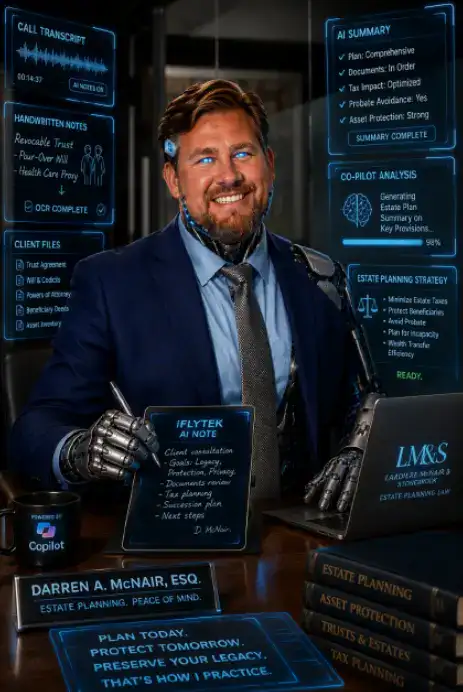
Artificial intelligence is an impressive tool. It can explain estate-planning terminology, help you organize your assets, suggest questions to ask an attorney, and even produce a document that looks like a will or trust.
I use AI myself, and I believe it can make legal services more efficient. But AI should assist with estate planning, not replace an experienced Ohio estate-planning attorney.
AI can only work with the information you provide. It will not necessarily ask about a child with special needs, a second marriage, an irresponsible beneficiary, a family business, property in another state, or conflicting beneficiary designations.
Those details may completely change the appropriate plan.
The greatest danger is often not an obviously wrong answer. It is the important issue AI never identifies.
An AI hallucination occurs when artificial intelligence confidently provides information that is inaccurate, outdated, incomplete, or simply invented.
In estate planning, a hallucination can have serious consequences. AI may use another state’s law, omit required Ohio language, create conflicting provisions, or recommend a strategy that does not fit your circumstances.
Because the finished document looks polished, the mistake may be difficult to spot. It might not be discovered until after your death or incapacity, when it is too late for you to correct it.
A document is not valid merely because it sounds legal. For example, Ohio wills generally must be signed and witnessed in a particular manner. Powers of attorney and health-care documents have their own requirements. A trust may also need to be properly funded by retitling assets and coordinating beneficiary designations.
AI cannot supervise the signing ceremony, evaluate your capacity, confirm that the correct people served as witnesses, retitle your property, or ensure that all parts of your plan work together.
When you hire me, you are not simply paying for forms. You are hiring someone to:
AI can generate language. It cannot sit across the table from you, understand your family, exercise legal judgment, or accept responsibility for the result.
Your estate plan may determine who manages your finances, makes medical decisions for you, raises your children, and receives everything you worked to build. That is too important to leave entirely to an algorithm, especially one that can hallucinate.
Darren A. McNair, Esq. is a partner at LM&S with nearly 25 years of legal experience helping individuals and families preserve wealth, protect assets, and create lasting legacies through thoughtful estate planning.
CONTACT ME TODAY: 614-534-1355 or [email protected]
Darren operates as a closed-source platform designed for the highest levels of confidentiality. Every consultation, document, strategy discussion, trust structure, and family planning objective remains protected within a secure environment, ensuring sensitive client information is handled with discretion, privacy, and professional care.
By combining decades of legal judgment with cutting-edge technology, Darren delivers efficient, insightful estate planning guidance while maintaining the trust and confidentiality clients expect from their attorney.
The information presented here has been prepared by Lardiere McNair for promotional and informational purposes only and should not be considered legal advice. This information is not intended to provide, and receipt of it does not constitute, legal advice. Nor does the receipt of this material create an attorney/client relationship. An attorney client relationship is not established until such time as Lardiere McNair enters in to a written engagement agreement with a specific client for a specific legal matter.
Copyright © 2026 Lardiere McNair & Stonebrook, Ltd., LPA, All rights reserved. Disclaimers: Artificial intelligence is used as a tool to supplement, enhance, make suggestions, and generate blog language from the thoughts, ideas, and opinions of our human lawyers. The final product is reviewed and edited by an attorney. LEGAL NOTICE: THIS MESSAGE IS AN ADVERTISEMENT AND SOLICITATION.
"*" indicates required fields